For the summer of 2025, 10 students were selected for the Summer Undergraduate Research Fellowships (SURF), an SJNY-funded undergraduate research program that provides stipends of $4,000 for each student recipient to work on research projects, overseen by a faculty mentor.
With an overarching goal of alleviating the economic pressures that can prohibit strong students from actively engaging in academic research opportunities, the SURF program is open to students of all disciplines. Recipients conduct their research for 10 weeks over the summer and then present at the Student Research Symposium the following spring.
Exploring the Efficacy of University Facilities and Resources
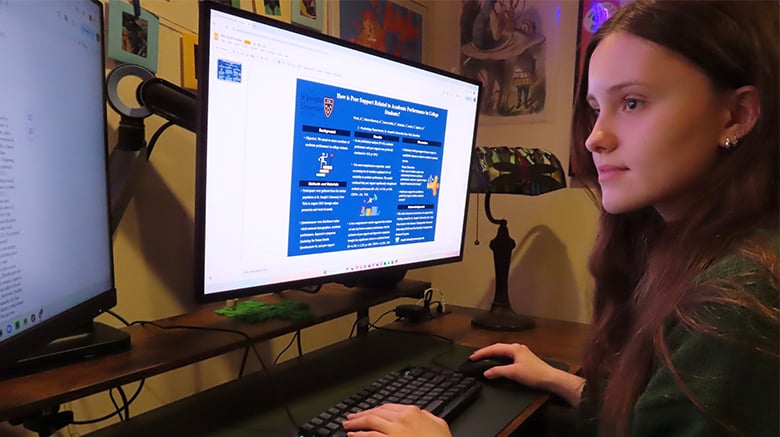
Brooklyn Campus psychology major Kaylee Finch ’26 was selected this year to conduct research on how effective SJNY’s campus facilities are at encouraging the development of peer support and connectedness in students. Being mentored by Anna Rita Egbert, Ph.D., assistant professor of psychology on the Brooklyn campus, Finch compared students’ mental health and academic performance to their level of access to these facilities based on if they are residential, commuter, hybrid, or online students.
“Being selected to be a part of the SURF program is an incredible honor,” said Kaylee Finch, class of 2026. “The opportunity to expand my research skill set in such a comprehensive and accessible manner is unlike anything else I had looked into.”
Finch was drawn to this kind of research because it represents the kind of work she wants to do after graduation as an industrial-organizational psychologist.
“This topic interested me as I am considering pursuing a career in industrial-organizational psychology. Examining how the physical spaces that surround us impact how we socialize, work, and develop fascinates me. I am a commuter student here at SJNY, and the information I gather from this study will be applicable to me. We may be able to use this research to further develop our facilities and improve my own, along with everyone else’s, experience at SJNY.”
Research with Real-World Relevance
A typical research day for Finch starts with a meeting with Dr. Egbert either on Zoom or in the BRAID (Brain Resilience to Aging and Infectious Diseases) lab at the Brooklyn campus detailing what work will be done that day. After, she would work on said tasks, whether it is the development of scales, literature review, imbedding of questions into Qualtrics, cleaning of data, or data analysis.
“I have the privilege of completing my research online, as we plan to distribute our survey to SJNY Brooklyn students through an online platform. This offers more flexibility in my schedule and the opportunity to connect with other collaborating students with ease,” said Finch.
Though she enjoyed the entire research process, Finch’s favorite part was being able to collaborate with peers on ideas and share experiences.
“I enjoyed many elements of my research; however, I’ve really enjoyed the process of developing the scale we will use to measure the key factors in our facilities which drive peer support, connectedness, and student success. It was a collaborative process, and I was able to brainstorm with my peers. We had to share our experiences on campus and think about what impacts us in each of these spaces. I enjoyed being able to reflect on these spaces in an analytical manner, as that is ultimately the basis of this project,” said Finch.
With research that has real-world relevance, Finch is able to apply what she has learned to create change not only within the SJNY community but also within communities beyond campus.
“By collecting data directly from SJNY students, Kaylee’s work gives students a voice and generates actionable insights,” said Egbert. “This research can directly inform the creation of targeted, evidence-based support systems designed to foster student well-being and academic success.”
The Impact of SURF Beyond SJNY
Research like Finch’s demonstrates how the SURF program extends learning beyond coursework by fostering collaboration and serving as a reference point for future academic and professional development.
“What I value most is witnessing the passion and drive students bring to research. It’s inspiring to see their ideas take shape and evolve into meaningful projects. The SURF program is especially rewarding because it offers students a rare chance to fully immerse themselves in the research process—essentially giving them a hands-on preview of a scientific career. It’s not just about building skills or gaining knowledge; it’s also about reducing financial barriers so students can focus wholeheartedly on their academic growth and personal development,” said Egbert.
This story is part of OnCampus’ “SURF Recipients 2025” series, centered on students conducting research at St. Joseph’s University, New York in anticipation of the University’s 2026 Student Research Symposium. To read more from this series, click here.
