
September is Suicide Prevention Month, a time dedicated to raising awareness about suicide prevention and the resources available to those who may be struggling.
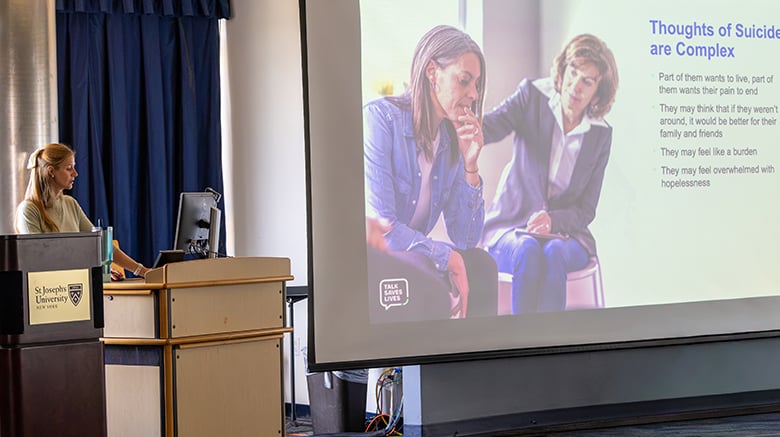
In recognition of Suicide Prevention Month, St. Joseph’s University, New York hosted “Talk About It: Suicide Prevention”, an event organized by the Center for Counseling and Wellness. The common hour presentation was held Sept. 23 in O’Connor Hall’s McGann Conference Center on the University’s Long Island Campus.
Katie Mercer of the American Foundation for Suicide Prevention’s Long Island chapter led the presentation which focused on recognizing, warning signs, understanding risk and protective factors, and connecting individuals with mental health resources and support.
The presentation provided participants with information and practical tools to better understand suicide prevention and the ways they can support themselves or someone they are concerned for. Mercer also emphasized the importance of discussing suicide in a safe and accurate way to help reduce stigma and encourage individuals to seek help when they need it.
Understanding Mental Health and Suicide Prevention
The presentation began by discussing the connection between mental health and suicide while comparing the former to physical health.
“So, just like physical health, we all have mental health, and just like physical health issues, mental health challenges are part of the human experience,” Mercer said.
Mercer explained that there is no single cause of suicide. Instead, a variety of factors can contribute to an individual’s risk, including mental health conditions, substance use, previous suicide attempts, trauma, chronic health conditions and social factors.
“But the good news is there are also protective factors that can help reduce someone’s suicide risk,” Mercer continued.
These factors can include building strong relationships, developing healthy coping skills, accessing mental health care, and connecting with people who provide emotional support. These factors can play an important role in reducing risk and supporting individuals’ overall well-being.
Recognizing the Warning Signs
A major focus of the presentation was learning how to recognize warning signs that someone who may be struggling could display. Participants were encouraged to pay attention to changes in a person’s typical behavior, mood and conversations.
“Most people are surprised to know that most people who are suicidal talk about it. They might talk about it in a joking way or may talk about it more subtly,” Mercer said.
Warning signs may include discussions about feeling burdensome, trapped or experiencing unbearable emotional pain.
Changes in behavior such as withdrawing from family and friends, losing interest in activities they once enjoyed, changes in sleeping habits or giving away personal possessions, can also indicate that someone may need support.
Mercer emphasizes the importance of noticing changes that seem unusual for an individual and trusting your instinct when something does not seem right.
Starting the Conversation
The presentation also addressed how to approach someone who may be struggling.
“Have a conversation. If you are worried about someone, assume that you’re the only one who’s going to check in with them,” Mercer said.
While having a conversation about suicide may feel uncomfortable, Mercer encouraged participants to reach out rather than assume that someone else will. Mercer explained that these conversations are best approached privately and with care.
She encouraged participants to avoid minimizing a person’s feelings, debating whether life is worth living, or attempting to fix the situation with advice.
“Just like you wouldn’t tell someone who’s having a heart attack they need to start exercising, someone in mental health distress also needs immediate support,” Mercer said.
Rather than trying to solve someone’s problems, individuals can express concern, listen without judgement and encourage the person to seek professional support. Participants were also encouraged to ask directly if they are concerned that someone may be thinking about suicide.
The presentation addresses the common misconception that asking someone about suicide will cause them to consider it. Mercer explained that asking the question can instead create an opportunity for someone to share what they are experiencing and receive help.
If someone says they are thinking about suicide, individuals are encouraged to continue listening, ask appropriate follow up questions and help connect the person with professional support.
Creating a Safe Environment
Another important aspect of suicide prevention discussed during the presentation was creating a safer environment by limiting access to lethal means during periods of increased risk.
“For most people who are in suicidal crisis, if they cannot access the method that they planned to use, even for a short period of time, they are unlikely to switch to another method,” Mercer said.
Participants learned that securing medication and firearms, as well as taking other steps to make potentially dangerous items less accessible, can provide time for a crisis to pass and an individual to receive support. The presentation emphasized that suicide prevention is not only about recognizing risk, but also about taking practical steps to help keep someone safe.
Resources and support
The event concluded by highlighting resources available to individuals experiencing a mental health or suicide crisis, as well as those who are concerned about someone else.
“Seeking mental health care is a sign of strength,” Mercer said.
The 988 Suicide & Crisis Lifeline was identified as a free confidential resource available 24 hours a day, seven days a week — by call, text or chat. Participants were reminded that 988 is available not only to individuals experiencing suicidal thoughts but also to people who are worried about someone else or looking for guidance and support.
Students were also encouraged to seek support from mental health professionals. Including counselors, psychologists, social workers, and psychiatrists, when needed.
Local resources were also discussed for individuals struggling with mental health concerns or those who have lost someone to suicide on Long Island, including St. Joseph’s University, New York’s Center for Counseling and Wellness.
By encouraging open and honest conversations about mental health and suicide, the presentation highlighted the importance of creating a community where individual feel confrontable seeking help and supporting one another.
“Together, when we continue to talk about suicide and talk about it safely and accurately, we can create a culture that prioritizes mental health,” Mercer concluded.
