In late June, St. Joseph’s University, New York’s Brooklyn Writers Foundry Creative Writing MFA gathered in the Burns Hall Parlors for a reading event given by three of the writing faculty members in the program. For the students in the MFA program, the event capped off an extraordinary week jam-packed with workshops, lectures and craft seminars focused on the craft of writing contemporary works of fiction, nonfiction and poetry.
But the week was special for an additional reason: It was the first time that the University has been able to showcase the writing program’s new low-residency format, which no longer required MFA students to attend all classes in person and instead required them to attend classes in person on the Brooklyn campus just twice a year for one intensive week – once in June and once in January. For the rest of the year, students would interact virtually with instructors and also partake in virtual discussion-based reading classes.
“We are Brooklyn’s only low-residency MFA program,” says Lee Clay Johnson, director of the program, “which allows us to offer the experience of the NYC literary scene to people from all over the map. We are located on a lovely historic campus in Clinton Hill, surrounded by literary legends and cultural institutions, and we’re proud to call our program one of the most affordable in the city. All of these aspects have helped us to build a healthy program.”
Offering a Creative Writing MFA with a Flexible Format
Part of what makes this program so robust is its low-residency design, which gives students flexibility and has the potential to attract a more diverse group of students, including non-traditional students as well as those from other geographic locations.
But the flexibility of the program isn’t just applicable to its format. For instance, students are also not limited to just one writing genre. In other words, if you’re writing works of poetry, it doesn’t necessarily mean you’re only exposed to that genre and need to take just poetry classes. You’re free to take fiction and nonfiction classes, as well.
“I’m in the poetry cohort,” says Caroline Fairey Meese, who is a student in the new MFA program. “So, I write primarily poems. But part of the reason I enrolled in the Brooklyn Writers Foundry,” Meese says, “was the potential for writing across genres. Most members of our incredible faculty write in multiple genres, and my practicum courses in the fall and spring were genre-agnostic. Anyone could bring in poems, stories or essays in response to assignments. I love that the guest speakers and faculty often describe their writing in one genre as influencing another.”
Creating and Cultivating an Expansive Artistic Community
It’s no secret that for centuries writers and poets have generally created their works of literature – poems, essays, short stories, novels, and other works – alone. However, like fine-art painters, musicians, and other artists, writers and poets are engaged in acts of creative and public communication with the world. So, having an artistic community to interact with and bounce ideas off of is not just helpful, it’s essential, particularly for new writers.
Luckily, at SJNY, the new Creative Writing MFA program provides its students with a very vibrant artistic community of not only their creative writing peers, but with creative writing professors and guest lecturers, as well.
“My classmates and I have worked on a literary magazine and a reading series; we’ve workshopped each other’s poems and prose; we’ve passed volumes of poetry back and forth, attended readings, and argued about analysis,” says Meese, “I didn’t realize that a huge missing piece within my creative need was the community of other writers that I found here, both my peers and my mentors.”
What’s more is that the heart of this program, its students, is actually expanding and adding new voices, including non-traditional students, to this artistic community.
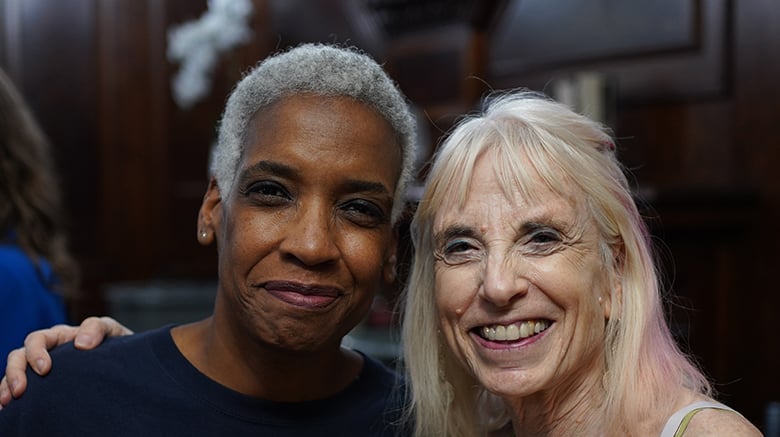
Take Diane Jacobowitz, who is also currently a student in the program and who has had a very successful career in another field of art. “I’ve had a full life as a dancer and teacher,” Jacobowitz says. “Actually, this is my second MFA program: I received an MFA in Dance years ago from Connecticut College. I also founded a dance education nonprofit in Brooklyn, which I developed from scratch and is my legacy today…. I love that world and will always see myself as a dancer.”
Yet, Jacobowitz has also always been interested in creative writing, but was nervous about making the change. “I was filled with trepidation to dip my toes into a radically different field after having such a successful life as a dancer and teacher.”
Initially, she tried to work on her own as a writer. But, she said, “I enrolled because I felt I had gone as far as I could.” She said she needed mentorship, support and accountability to access this next phase of her writing life.
“I’m glad to say that I found those things at the Foundry, which has also shown me, especially in the new low-res model, how to hold myself accountable even without external deadlines. I’ve done so much more growing than I anticipated. This is a great program for writers who really want to learn their craft in an intimate, supportive community of other writers.”
Learning the Craft of Writing…from Working Writers
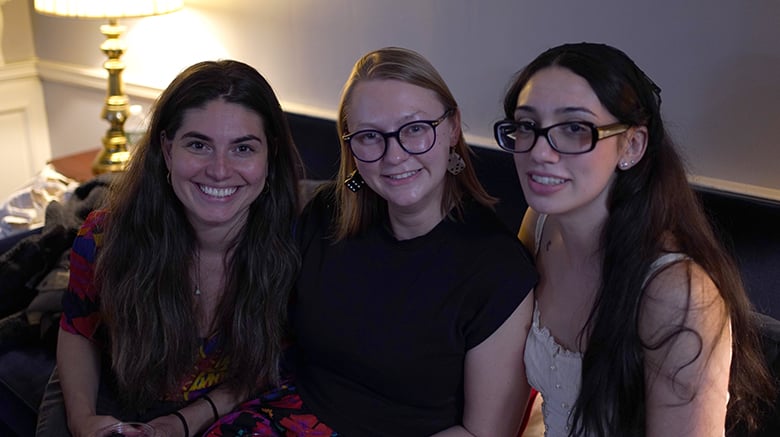
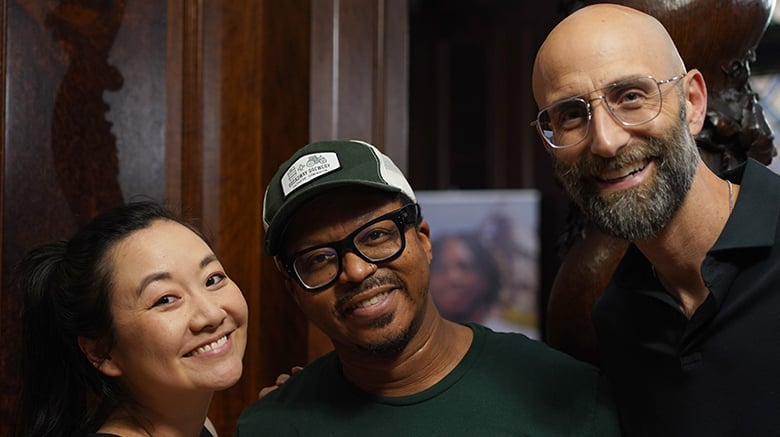
The primary goal of the program is for students to learn the skills that allow them to improve their writing. It’s why events like faculty readings are held. Students can see first-hand how their teachers, who are also working writers, develop and create their works of fiction, nonfiction and poetry.
“Faculty readings bring the whole community together,” says Johnson. “They are excellent opportunities for fellowship and celebration. These readings also show the students that their professors are real writers, not just teachers, and that they practice what they preach. It’s one thing to hear a professor theorize about how dialogue works, but it’s quite another to hear them employ it in real time. Our faculty are superb readers of their own work, and these events can be very entertaining.”
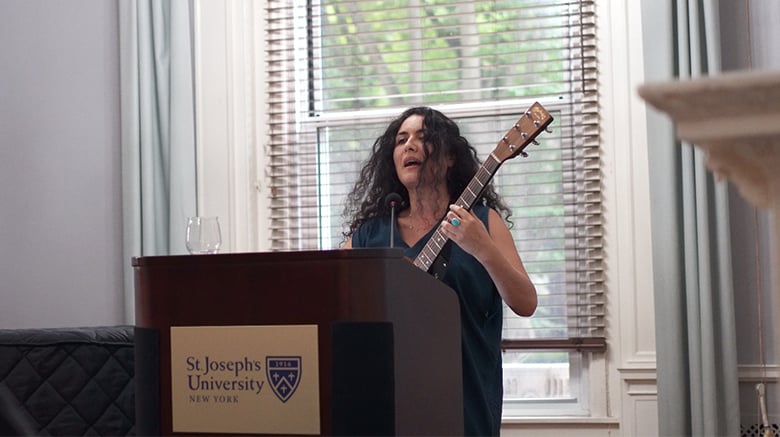
For Meese, such events have been very enlightening and supportive as well as entertaining. “I love the feeling of camaraderie in the Parlors afterward and the attentiveness during the reading itself,” says Meese. “For instance, I loved Haleh Liza Gafori’s rendition of a Rumi poem with guitar and voice. I feel very lucky to get to learn from the Brooklyn Writers Foundry faculty.”
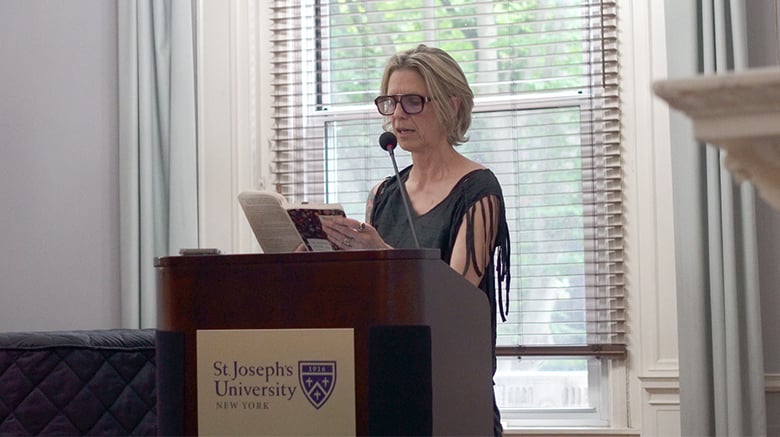
In addition to Haleh Liza Gafori, there were two other faculty members who read passages from their published works on June 27: John Cotter and Darcey Steinke.
Meese added that “as much as I learn about craft, literary analysis and the business of being a writer, I feel like I’ve learned just as much about how to be in a community of supportive, hard-working artists. In many ways, that community is the real reward for prioritizing one’s own creative work, sometimes years down the line.”
For Jacobowitz, seeing her writing professors in the program read from their works was both instructive and inspiring. “They are writers too,” says Jacobowitz “and writers are always learning to grow their craft. Reading work publicly is part of the writing process. I was inspired to hear them read and feel part of this community.”