
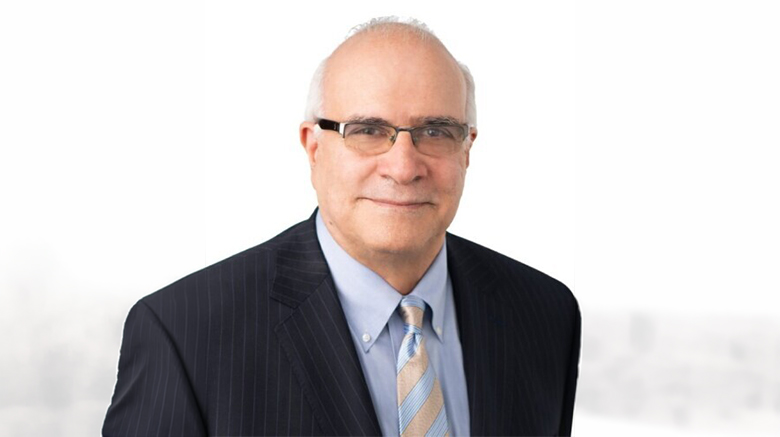
Former St. Joseph’s University, New York professor and legal counsel Robert J. Nobile has endured a career many can only hope to achieve. It can be defined as one of immense turbulence, fraught with hard work and tough decisions yet punctuated by moments of pride and success. Robert Nobile is a man who has never believed in running in place, using every challenge he is confronted with as an opportunity to grow.
The Early Days
When Robert graduated from college, he had no idea that the path he was set to walk on would lead to the doors of St. Joseph’s University, New York. In fact, his post-grad years saw him working for a variety of companies, eventually landing a job at the American Bank Note Company. There, he served as the company’s director of personnel and labor relations. The role made him responsible for several thousand employees, in addition to managing 21 collective bargaining agreements between unions at the company.
Long story short, when one union renegotiated a contract, it was Robert’s job to keep the others happy as well. And while he certainly enjoyed the work, it didn’t take long before he discovered that mediating jurisdictional disputes between unions was not exactly in his wheelhouse.
“What I found out pretty quickly was that I was in way over my head,” Robert shared. “I had good experience but I did not have what you would call traditional labor experience. I didn’t have any experience dealing with unions.”
Wanting to advance his education in order to excel in his position, Robert enrolled in law school, taking night classes while he continued to work full-time during the day. Studying law came with the opportunity for growth, but rather than continue at the same company in a new position made specifically for him, Robert found himself at a crossroads.
“The good news was since I was getting a law degree and had business experience, I was in demand more so than someone just getting out of school. Practical experience coupled with the degree put me on top of my peers in regards to looking for work,” Robert said.
Choosing to work for a small labor and employment firm in New York City as an attorney, Robert quickly found success. In just seven years, he rose to become a partner before moving on to an even larger firm. However, success for Robert would not only be determined by how well he applied his knowledge and experience to his own career. He wished to share it with others as well. Aside from his full-time work as an attorney, Robert taught as an adjunct professor at the New York Institute of Technology.
In a moment of chance, one of Robert’s students turned out to be an administrator at St. Joseph’s University, New York (then — St. Joseph’s College), which was at the time getting its Graduate School of Management off the ground. The University was looking for faculty to teach employment law, and thanks to his student’s recommendation, Robert would find a new home at SJNY.
27 Years Later at St. Joseph’s
For nearly three decades, Robert taught courses in employment law and legal aspects of business. Meanwhile, he would serve the University in a legal capacity as its employment lawyer, working pro bono (legal work without charge). His days involved client representation in all aspects from day-to-day advice to counsel in every area of labor and employment law.
Between working as a full-time professor and pro bono attorney for St. Joseph’s, as well as his responsibilities as partner at the firm Seyfath Shaw, one might ask how Robert found the time to do it all. According to him, time management was something he became well practiced in, spanning from his days in graduate and law school.
“I really learned how to marshal my time, because frankly if I didn’t, I would not have survived. All my waking hours were working or in school or studying. It was really by the grace of God I didn’t have a nervous breakdown. But I tell anyone considering law school that if I can do it, anyone can do it,” Robert said. “It’s just a matter of getting into the rhythm.”
It’s also worth mentioning that Robert is the author of several published books and dozens of articles pertaining to employment law. In 2020, he received the AV Preeminent Award by legal publisher Martindale-Hubbell. Robert is also in the International Who’s Who of Business Lawyers, a publication highlighting him as a leader in management labor and employment law.
And while the list of achievements goes on for Robert, what he cherishes most is the hard work, time and dedication he put into helping his clients and his students.
“I devoted my career to the law and to teaching. I truly am a blessed guy,” he shared.
Now in retirement, he leaves behind an indelible legacy at St. Joseph’s, one that is felt by its student, staff, faculty and alumni.
“When I interviewed Bob back in ‘99 for a faculty position within our newly established Graduate Management Study program, I knew from his resume that he would be a valuable asset to the program. And so, it turned out to be,” said Thomas Travis, Ph.D., special assistant to the president and former dean of the School of Professional Studies and vice president for planning at SJNY.
Professor Travis continued, “Bob became one of our star faculty members, popular with students and renowned for his expertise. What I didn’t anticipate at the time was that he would also become an indispensable resource providing pro bono legal advice to the University. Bob was available at all hours when we needed to sort out complicated cases — always available with sage advice and wit to go along with it. It has been my great honor to count Bob as a colleague.”
As he looks back on his time at St. Joe’s, Robert fondly remembers all of his interactions with students over the years.
“I had so many great students. You would teach and when there was graduation, students would come up and thank you for everything you did. And I would always leave the door open. I’d tell them, ‘When you’re in the working world, you’re going to run into issues. Pick up the phone and feel free to call me’,” Robert said.
Speaking of “leaving the door open,” Robert intends to do the same for the University, making himself available if ever someone should need him. And he promises that his fee shall remain the same.
