For the summer of 2025, 10 students were selected for the Summer Undergraduate Research Fellowships (SURF), an SJNY-funded undergraduate research program that provides stipends of $4,000 for each student recipient to work on research projects, overseen by a faculty mentor.
With an overarching goal of alleviating the economic pressures that can prohibit strong students from actively engaging in academic research opportunities, the SURF program is open to students of all disciplines. Recipients conduct their research for 10 weeks over the summer and then present at the Student Research Symposium the following spring.
Optimization Algorithms for Efficient Last-Mile Delivery in NYC
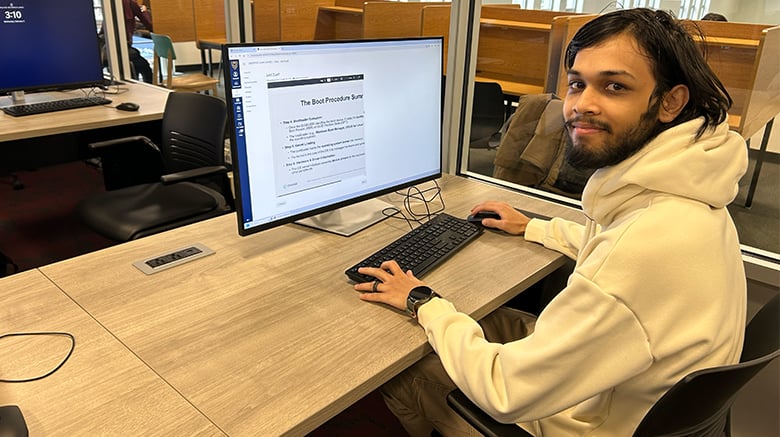
For 2025 SURF recipient Prasun Rimal ’26, a Mathematics and Computer Science double major on SJNY’s Brooklyn Campus, the logistics surrounding urban infrastructure is a subject of his curiosity and wonder. With infrastructure having an indelible impact on last-mile delivery, the last stage of transporting goods from their distribution hub to their final destination, it appeared that research into a such a topic would serve as a prime demonstration of what Rimal had learned during his time at St. Joseph’s. The task would require patience, diligence and concentration.
“I’ve always been fascinated by how cities work behind the scenes. Last-mile delivery is one of the most complex and impactful challenges in urban infrastructure, and combining that with data analysis and algorithm design felt like the perfect intersection of my interests in math and computer science,” Rimal shared.
For his 2025 SURF project, Rimal explored using real-time data to find the best routes that reduce traffic congestion to optimize truck deliveries. Putting both his math and computer science skills to the test, doing so involved working with real datasets and seeing how proposed theory can result in practical solutions.
“It’s exciting to uncover patterns, build models, and visualize how even small improvements in routing can make a big difference in efficiency and sustainability,” he continued.
A typical day for Rimal was spent debugging, analyzing outcomes and documenting what worked and what did not. He’d begin each day with reviewing progress from the previous session before implementing a new part of the plan. That could include cleaning data, developing algorithms or visualizing results.
Mentorship and Real-World Application
For Rimal, being selected as a SURF recipient is an honor, with it being his first dedicated research opportunity in the U.S. The opportunity also offered him the chance to work alongside his faculty adviser Elizabeth Zollinger, Ph.D., associate chair and professor of Mathematics and Computer Science at SJNY. Rimal defined the experience as “deeply rewarding.”
“She often brings new perspectives and insights to the project that I hadn’t considered, and those suggestions have helped me improve the approach and refine the technical direction,” he said. “I truly value her feedback and make a point to incorporate it into my work. Her ability to see the bigger picture and guide the research with both structure and creativity has been essential to my growth as a researcher.”
Meanwhile, Professor Zollinger appreciated the practical applications of Rimal’s research as well as the opportunity for him to receive hands-on experience outside of the classroom.
“Prasun is modeling delivery routes and schedules in Manhattan. Once the model can describe current data, then we can use it to find optimal routes or adjust assumptions to see how they might change the simulations.”
She continued, “It is also a nice change from classes — research means solving problems that don’t just have answers in the back of the book. Doing research in mathematics involves lots of false starts and creativity but when we are on the right track, it has a lot of power to answer questions about real world situations.”
This story is part of OnCampus’ “SURF Recipients 2025” series, centered on students conducting research at St. Joseph’s University, New York in anticipation of the University’s 2026 Student Research Symposium. To read more from this series, click here.
